How long does shipping from China to Argentina actually take in 2026?
Sea freight from China to Argentina takes 30-48 days port to port, 35-58 days door to door. Real transit times by origin port and destination, plus what drives the variance.
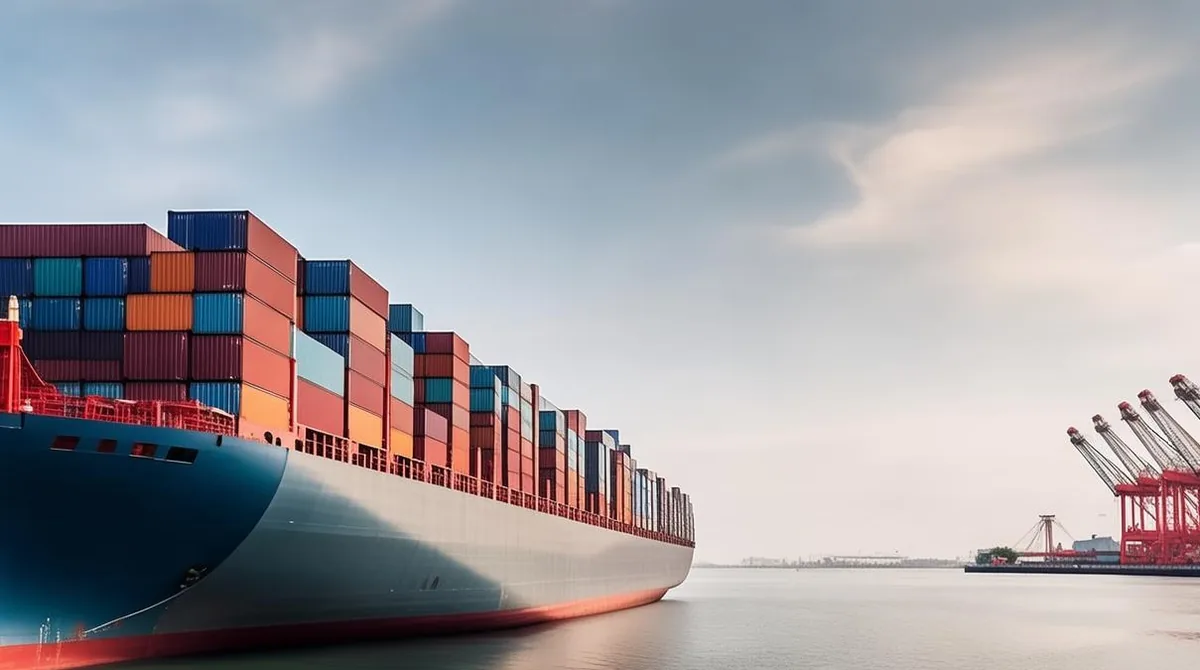
Sea freight from China to Argentina takes roughly 30 to 48 days port to port, and you should plan on 35 to 58 days door to door once customs clearance and inland delivery are included. The single biggest variable is the Chinese origin port: Shenzhen departs fastest at 30–38 days to Buenos Aires, while Qingdao to Rosario is the slowest lane we run at 42–48 days. Air freight is a different product entirely — 5 to 7 days to Buenos Aires — but it only makes economic sense for cargo under roughly 300 kg or for time-critical goods where a week of stock-out costs more than the freight premium. Add another 5 to 10 business days for ARCA customs clearance on top of any transit figure, and budget for transshipment delays of a week or more during peak season.
TL;DR — key figures
- Sea freight, China → Buenos Aires: 30–38 days from Shenzhen, 32–40 from Guangzhou, 33–40 from Ningbo, 35–45 from Shanghai, 35–42 from Shenzhen to Rosario.
- Sea freight, China → Rosario: 35–48 days — always 3–8 days slower than Buenos Aires because of lower sailing frequency and a river approach.
- Air freight, China → Buenos Aires: 5–7 days; to Rosario 7–10 days including the inland leg.
- Customs clearance: add 5–10 business days on top of port-to-port transit. This is the step importers most often forget to budget for.
- LCL adds 3–7 days over FCL because your boxes wait for a consolidation group; hazardous and out-of-gauge cargo adds 7–14 days.
Why transit time to Argentina is not a simple number
Most freight forwarders publish a single transit time per lane. For Argentina that number is misleading, because four separate things happen between the moment your container is loaded in China and the moment it is usable in Argentina: the sea leg itself, transshipment at a hub, customs clearance, and inland delivery. Each one has its own variability, and they do not average out — they add up.
There is also a structural reason Argentina lanes run long. The country imports the majority of its container volume through a small number of gateways on the South Atlantic route. Cargo from East Asia typically transships at a hub in South America, Southeast Asia, or the Mediterranean before the final leg into Buenos Aires. Each transshipment is a place where a schedule slip becomes a multi-day delay, because your box sits on a quay waiting for a vessel that itself arrives late.
This matters commercially. When you quote a customer a delivery date, the honest question is not “how long does the ship take” but “what is the worst realistic case, and what happens if it slips”. We publish ranges rather than averages for exactly that reason — a range with a known width lets your buyer plan inventory. A single optimistic number gets you a complaint.
Actual transit times by origin port and destination
The table below is our published lane schedule, not a third-party aggregator estimate. All figures are port to port and were last verified on 2026-11-03.
| Origin (China) | Destination | Sea freight (FCL) | Sea freight (LCL) | Air freight | Sailing frequency |
|---|---|---|---|---|---|
| Shenzhen | Buenos Aires | 30–38 days | 33–41 days | 5–7 days | Weekly |
| Shenzhen | Rosario | 35–42 days | 38–45 days | 7–10 days | Bi-weekly |
| Guangzhou | Buenos Aires | 32–40 days | 35–43 days | 5–7 days | Weekly |
| Guangzhou | Rosario | 36–43 days | 39–46 days | 7–10 days | Bi-weekly |
| Ningbo | Buenos Aires | 33–40 days | 36–43 days | 5–7 days | Weekly |
| Ningbo | Rosario | 36–43 days | 39–46 days | 7–10 days | Weekly |
| Shanghai | Buenos Aires | 35–42 days | 38–45 days | 5–7 days | Weekly |
| Shanghai | Rosario | 38–45 days | 41–48 days | 7–10 days | Weekly |
| Qingdao | Buenos Aires | 38–45 days | 41–48 days | 5–7 days | Bi-weekly |
| Qingdao | Rosario | 42–48 days | 45–51 days | 7–10 days | Monthly |
Zárate, the inland transfer port on the Paraná, runs roughly 2–5 days longer than Buenos Aires because cargo must move further upriver and through an additional handling step. It is worth it only when the final destination is north of Buenos Aires province.
What actually drives the variance
Origin port and sailing frequency
The gap between the fastest and slowest Chinese origin on the same destination lane is around eight days. That is not sailing distance — it is schedule density. A weekly sailing means your cargo waits an average of three and a half days for the next departure and then inherits whatever delay the previous vessel arrived with. A monthly sailing, like Qingdao to Rosario, means an average wait of two weeks before the ship even leaves. If your product is seasonal or your cash flow is tight, the sailing calendar matters as much as the transit table.
Transshipment hubs
Direct China–Argentina container services are the exception rather than the rule. The standard routing moves cargo through a transshipment hub — commonly Singapore, Colombo, Rotterdam, or a South American hub such as Callao or Cartagena — before the final leg. Each transshipment costs two to five days in practice, and the cost is higher when the inbound and outbound vessels are not well synchronised.
Customs clearance
Argentine import clearance through ARCA typically takes 5 to 10 business days for standard commercial cargo with complete documentation. Clearance is not the same thing as the SEDI declaration itself — it is the physical inspection, duty assessment and release process that follows. A missing certificate or an NCM code that does not match the invoice will stop that clock entirely. Budget the clearance period separately from the sea leg, and make sure the document set is right before the container lands, not after.
Cargo type and consolidation
LCL shipments run 3 to 7 days longer than FCL because your cargo is deconsolidated, grouped and re-loaded. Hazardous materials, batteries, chemicals or anything requiring a special permit add 7 to 14 days. Out-of-gauge or overweight cargo can add 5 to 10 days depending on the stowage plan. If your cargo is unusual, tell your forwarder before booking, not at the origin port.
How to plan a realistic delivery date
- Fix the origin port first. If your factory is in Shenzhen and you have a choice of consolidation point, Ningbo is generally three to five days faster to Buenos Aires. The port of loading decision is often worth more than the freight rate negotiation.
- Work backwards from a required in-stock date, not forward from a booking date. Add 58 days to find the latest booking date for a standard FCL shipment that must be sellable by a given day. Add 75 days if the cargo is LCL, and 90 if it is hazardous.
- Check the sailing calendar for the cut-off. Chinese ports close booking several days before vessel departure — typically 5 to 7 days for documentation and 3 days for container stuffing. A missed cut-off means waiting a full week.
- Prepare the document set before the container is loaded. The single largest avoidable delay in Argentina imports is a document rejection at clearance. Commercial invoice, packing list, bill of lading, and any product-specific certificate should be reconciled against the NCM code before the ship departs.
- Book inland delivery in advance but keep it flexible. Once customs releases the cargo, the inland leg to a warehouse in Córdoba or Mendoza adds 2 to 5 days. If the importer has a truck booked and the container is held for inspection, demurrage starts.
- Ask your forwarder for the range, not the average. A quote that says “35 to 42 days port to port, plus 5 to 10 for clearance” is far more useful than one that says “about 40 days”. You can build inventory policy on a range; you cannot build it on an average.
Common misconceptions about Argentina transit times
“Shipping is faster than it used to be”
This claim circulates widely in Chinese logistics marketing and it is not supported by the schedule data. On the China–Argentina lane, published transit ranges have been broadly stable. What has changed is the regulatory environment, not the sailing time. If a competitor quotes a noticeably faster lane than the table above, ask them whether their figure includes transshipment, customs clearance and inland delivery, or whether it is simply the port-to-port number with the harder parts left out.
“Air freight is only for urgent cargo”
Air freight at 5 to 7 days is not merely an emergency option for Argentine lanes. For a product with a short selling season, a 30-day sea delay can mean missing an entire window. The correct comparison is air premium versus the cost of unsold inventory, not air premium versus sea rate. For consignments under roughly 300 kg with a perishable or trend-sensitive product, air is frequently the cheaper decision.
“Buenos Aires is the only gateway”
Buenos Aires handles the overwhelming majority of container traffic, but Rosario and Zárate both handle meaningful volume on the Paraná. For bulk and project cargo, Rosario is often the better option. For cargo destined north of Buenos Aires, Zárate can cut the inland leg. The choice affects both the transit time and the inland cost, so it is worth evaluating rather than defaulting.
Check your own lane in the transit calculator
Instead of reading a table and doing arithmetic, use our China to Argentina transit time calculator. Select your origin port, destination port, mode and cargo type, and it returns the transit range, the separate customs clearance band, and the combined total. It is built on the same lane schedule shown above, so the numbers match what we actually book.
For the underlying schedule, our China to Argentina transit times guide covers the port-level detail, and our sea freight service page explains how we handle FCL and LCL bookings on these lanes.
Frequently Asked Questions
How long does shipping from China to Argentina take including customs?
Plan on 35 to 58 days door to door for standard FCL sea freight. That is 30 to 48 days port to port, plus 5 to 10 business days for ARCA customs clearance, plus inland delivery. LCL adds 3 to 7 days at origin, and hazardous cargo adds 7 to 14 days.
What is the fastest shipping option from China to Argentina?
Air freight is fastest: 5 to 7 days to Buenos Aires from any major Chinese airport, including clearance at the airport terminal. It is usually economical above roughly 300 kg, and it is the right choice when a stock-out costs more than the freight premium.
Why is Rosario slower than Buenos Aires?
Rosario is a river port on the Paraná with fewer sailings than Buenos Aires — sometimes bi-weekly or monthly — and a lower draft ceiling that restricts available vessels. Expect 3 to 8 days longer than the Buenos Aires lane, with more variability.
What happens if my shipment is delayed in transit?
Delays at a transshipment hub are the most common cause and usually cost 3 to 7 days. Because our published figures are ranges rather than averages, they already account for typical variance. For time-critical cargo, ask for a firm vessel departure date in writing and for notification when the container transships.
Can I ship from a Chinese port that is not on your published list?
Yes. We book from all major Chinese container ports including Tianjin, Xiamen, Qingdao, Dalian and Yantian, plus inland rail departures. The published schedule covers the ports with regular consolidated service. For other origins we quote the actual routing on request — contact us with your port, cargo and destination.
Next Steps
Get a real rate for your lane. Send us your origin port, destination, container type and cargo description, and we will reply with a door-to-door transit range and a rate within 24 hours. You can also run your own lane through the transit time calculator first.
References and Source Notes
All regulatory and transit figures on this page were last verified on 2026-11-03. Regulatory facts change — always confirm duty rates and customs requirements against ARCA’s live tariff (AIA) before quoting a landed cost to a customer.
Contact Us
DEDICATED
China–Argentina
Trade Lane
Phone
86 15356024385
info@argentina-shipping.com
Address
17 Floor, Hualian Building, No.55 Dongdu Road, Ningbo, Zhejiang, China
Get a rate for your shipment
Tell us the lane and cargo — we reply with a real rate within 24 hours.